




Key Takeaways
- Automated interview scheduling software helps recruiters schedule interviews without manual coordination.
- The system syncs calendars and allows candidates to book interview slots instantly.
- Large companies like Meta, Apple, Amazon, Netflix, and Google use scheduling automation for high-volume hiring.
- Automation reduces back-and-forth emails and prevents scheduling conflicts.
- Candidates get flexibility to choose interview times based on their availability.
- Automated reminders improve interview attendance and reduce no-shows.
- Recruiters save time and can focus more on candidate evaluation instead of logistics.
- Scheduling platforms support multi-round interviews and global hiring workflows.
- Organizations using automation experience faster hiring cycles and better candidate experience.
- The blog compares top automated interview scheduling platforms and explains how they improve modern recruitment processes.
Hiring at companies like Meta, Apple, Amazon, Netflix, and Google happens at an enormous scale. Thousands of candidates move through interview pipelines every month across different countries, departments, and time zones.
Managing this manually would be impossible.
Instead of endless email threads and calendar confusion, these companies rely on automated interview scheduling platforms to coordinate interviews quickly and accurately. These tools remove repetitive work for recruiters while giving candidates a smooth scheduling experience.
In this blog, we explore the top automated interview scheduling platforms trusted in large-scale hiring environments and why they are essential for modern recruitment teams.
Things You Will Learn
- How automated interview scheduling works in enterprise hiring
- Tools used in large-scale tech recruitment environments
- Pros and cons of top scheduling platforms
What Is Automated Interview Scheduling?
Automated interview scheduling software connects calendars, detects availability, and allows candidates to book interviews instantly without recruiter involvement.
Instead of email coordination, the system automatically:
- Suggests interview slots
- Sends confirmations
- Handles rescheduling
- Updates all calendars in real time
Once a candidate selects a slot, the system updates calendars, sends meeting links, and informs all stakeholders.
The result is simple: faster scheduling, fewer errors, and better candidate experience.
Why Automated Scheduling Matters in High-Volume Hiring?
Large tech companies conduct multi-stage interviews involving several interviewers. Without automation, recruiters spend hours every week just coordinating schedules.
Automated scheduling platforms help by:
- Reducing back-and-forth emails
- Preventing double bookings
- Managing global time zones automatically
- Improving interviewer utilization
- Increasing candidate attendance rates
Studies show recruiters can spend up to 6–10 hours per week coordinating interview schedules. [ref]
According to multiple HR technology studies, automated scheduling can reduce interview coordination time by up to 60%, allowing recruiters to focus more on candidate evaluation rather than logistics.[ref]
For organizations hiring at scale, scheduling automation has become a foundational layer of modern recruitment operations.
Why Do MAANG Companies Need Scheduling Automation?
Large tech companies run multi-stage interviews involving multiple interviewers across time zones.
Manual scheduling creates:
- delays in hiring
- missed interview slots
- recruiter workload overload
Automation ensures interviews happen faster and consistently.
Verbatim Industry Insight:
“Recruiters spend nearly 35% of hiring time on coordination tasks rather than evaluation.” Recruiting Operations Benchmark Report
How We Selected These Platforms
To create this list, we evaluated tools based on:
- Public industry adoption and recruiter usage
- Features suited for enterprise hiring workflows
- Calendar and ATS integrations
- Multi-round interview support
- Scalability for global teams
- Candidate experience capabilities
These platforms offer capabilities aligned with hiring environments similar to MAANG-level recruitment operations.
Top 5 best Interview Scheduling Platforms in Use by MAANG
1. InCruiter Interview Scheduling Software
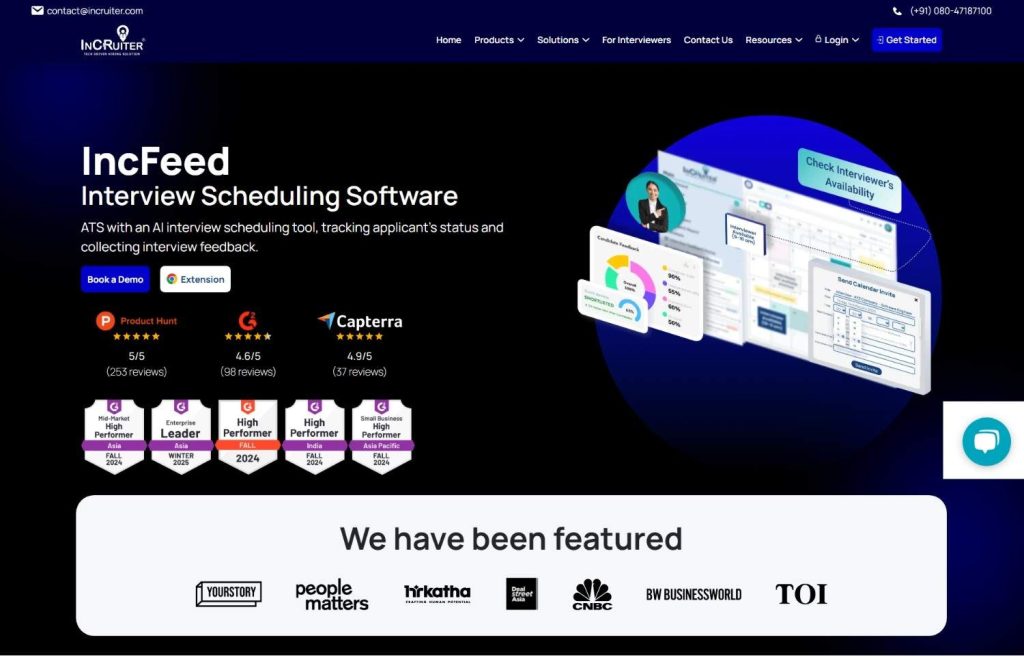
InCruiter Interview Scheduling Software is designed for recruitment teams handling complex and fast-moving hiring pipelines. The platform automates interview coordination using real-time calendar data, helping recruiters schedule interviews without manual intervention.
Instead of switching between emails, calendars, and tracking sheets, recruiters manage everything from one dashboard.
It works especially well for organizations running multiple interview panels or hiring across locations.
Key Features
- Live Google and Microsoft calendar synchronization
- Public and private interview booking links
- Automated panel availability matching
- Candidate self-scheduling options
- Interview confirmation alerts
- Automated reminders and follow-ups
- Real-time interviewer and candidate tracking
- Supports high-volume hiring workflows
Pros
- Built for multi-round interviews
- Reduces scheduling conflicts
- High automation level
- Improves interview attendance
Cons
- Enterprise-focused (may be advanced for small teams)
- Requires workflow setup initially
Best for: Enterprises and scaling companies managing multi-round interviews.
2. factoHR
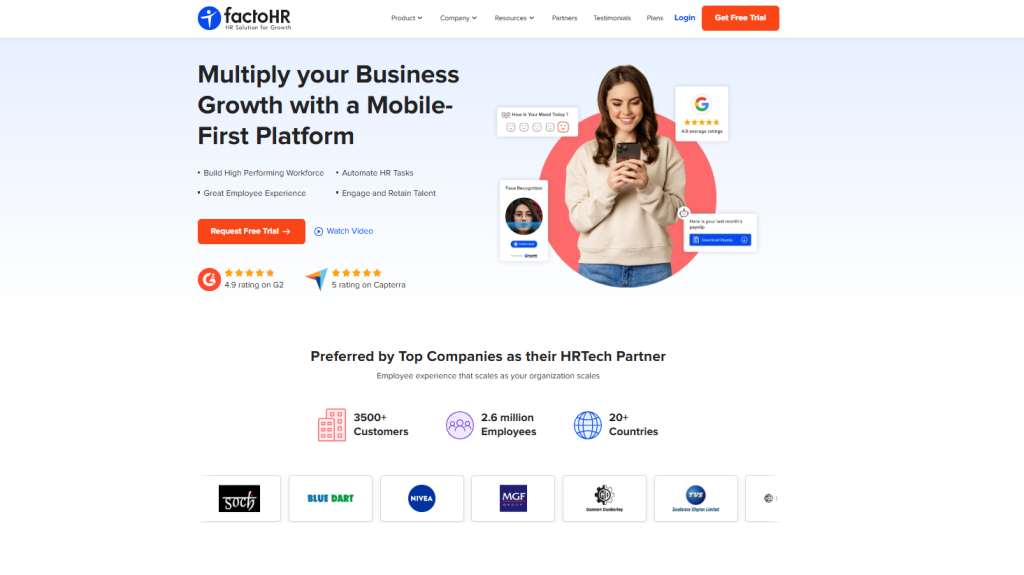
factoHR is a cloud-based HRMS platform that combines recruitment automation with payroll and employee management. Its interview scheduling capabilities simplify coordination for organizations handling structured hiring processes.
Recruiters can schedule multiple interview rounds while maintaining visibility across hiring stages. Because scheduling connects directly with onboarding workflows, teams experience a smoother transition from candidate selection to employee onboarding.
Key Features
- Automated interview coordination
- Calendar syncing and reminders
- Multi-stage hiring workflow management
- Integrated HR and payroll system
- Centralized candidate tracking
Pros
- All-in-one HR platform
- Strong compliance support
- Smooth onboarding transition
Cons
- Scheduling features not standalone-focused
- Learning curve for new users
Best for: Organizations wanting recruitment and HR operations in one system.
3. GoodTime
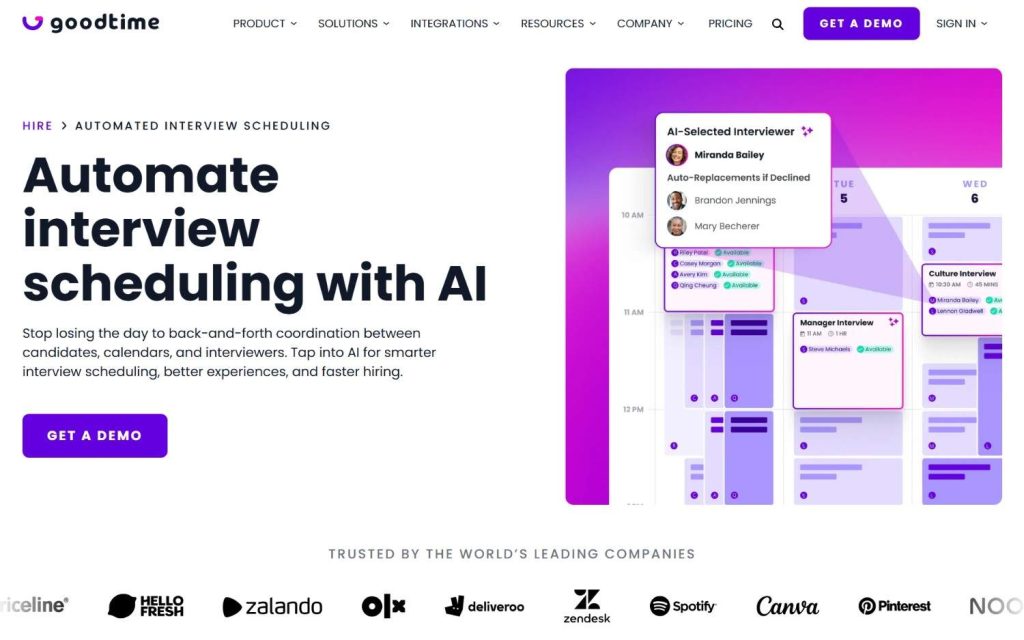
GoodTime focuses on intelligent scheduling for companies conducting large volumes of interviews. The platform automatically balances interviewer workloads and suggests optimal scheduling slots.
It reduces recruiter workload significantly while improving operational efficiency across hiring teams.
GoodTime is particularly strong in technical hiring environments where panel interviews are common.
Key Features
- Smart scheduling automation
- Interviewer load balancing
- Real-time rescheduling
- Scheduling analytics and insights
- Enterprise calendar integrations
Pros
- Excellent for high-volume hiring
- Strong analytics insights
- Saves recruiter time
Cons
- Enterprise pricing model
- Setup requires integration planning
Best for: Fast-growing tech companies and enterprise recruiting teams.
4. Paradox
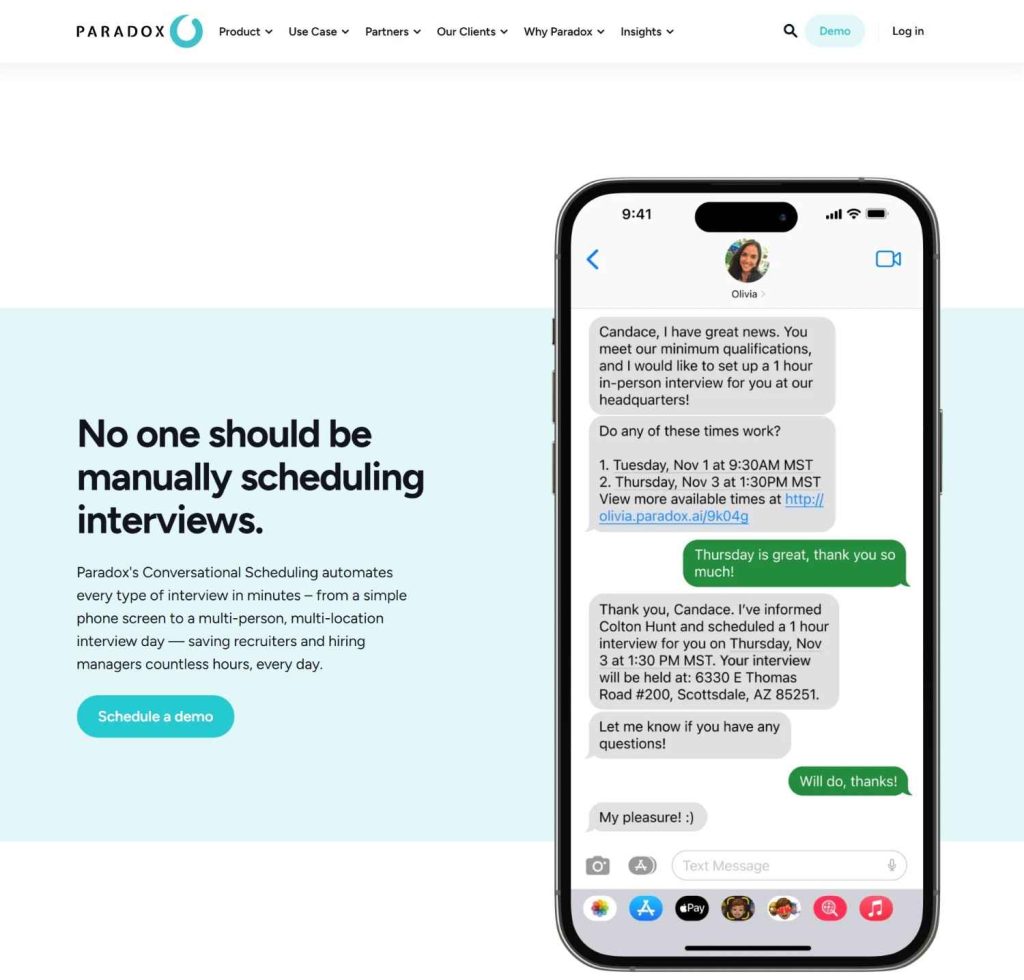
Paradox introduces conversational automation into interview scheduling through its AI assistant, Olivia. Candidates interact through chat or messaging to schedule interviews instantly.
This conversational approach removes friction and speeds up scheduling, especially for roles requiring quick hiring decisions.
Key Features
- Conversational AI scheduling assistant
- Real-time candidate interaction
- Automated confirmations and reminders
- Mobile-first scheduling experience
- High-volume hiring support
Pros
- Fast candidate response
- High engagement rates
- Ideal for large hiring campaigns
Cons
- Chat-first experience may not suit all roles
- Customization required for workflows
Best for: Organizations prioritizing speed and candidate engagement.
5. Calendly
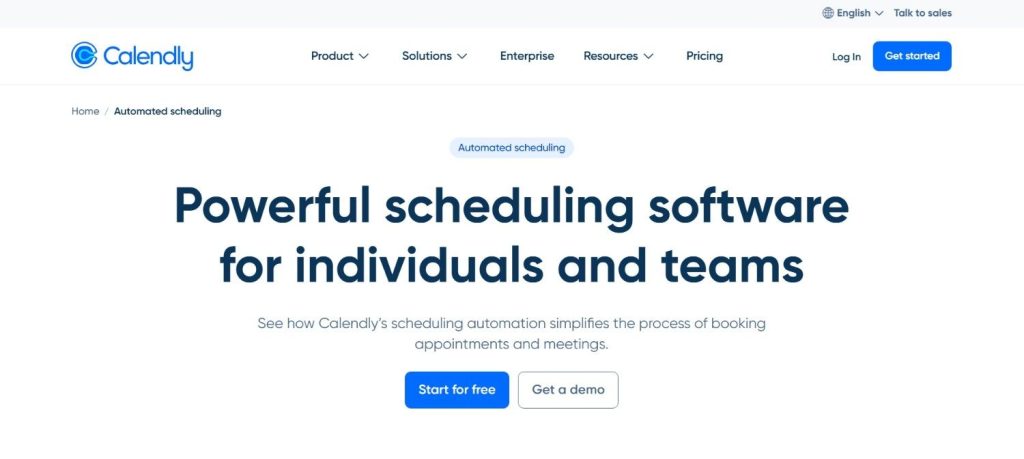
Calendly is one of the most widely used scheduling tools due to its simplicity and flexibility. Recruiters can share booking links that allow candidates to choose available interview times.
Although not built exclusively for recruitment, many hiring teams use Calendly for early-stage or one-on-one interviews.
Key Features
- Easy booking links
- Google and Microsoft calendar integrations
- Automated reminders
- Time buffers and availability controls
- Quick setup with minimal training
Pros
- Very easy setup
- Affordable pricing
- Clean user experience
Cons
- Not recruitment-specific
- Limited enterprise hiring automation
Best for: Small teams and early-stage interview scheduling.
Why MAANG companies use Interview Scheduling Platform?
MAANG companies use interview scheduling platforms to manage the complexity and volume of their hiring processes with precision and speed. These platforms eliminate the delays caused by manual coordination, reduce scheduling conflicts, and ensure every interviewer is used efficiently.
Automated scheduling platforms help by:
- Accelerating hiring timelines
- Eliminating coordination delays
- Standardizing interview workflows
- Improving recruiter productivity
- Creating consistent candidate experiences
With roles spread across global offices and interview panels involving multiple stakeholders, automation becomes essential. Scheduling tools also improve candidate experience by offering flexible booking options and timely communication.
For MAANG, the right platform means faster hiring decisions, better collaboration, and a more consistent interview process across all levels.
Key Benefits of Automated Interview Scheduling Software
Here’s what organizations typically gain after adopting scheduling automation:
| Hiring Challenge | How Automated Scheduling Solves It | Business Outcome |
| Slow interview coordination | Real-time calendar syncing removes manual scheduling | Faster hiring decisions |
| Recruiter workload overload | Automation handles invites, reminders, and updates | More recruiter productivity |
| Candidate drop-offs | Self-booking gives flexibility and control | Better candidate experience |
| Interview no-shows | Automated reminders and confirmations | Higher attendance rates |
| Multi-panel complexity | Smart availability matching across teams | Smooth collaboration |
How to Choose the Right Interview Scheduling Software
Before selecting a platform, consider:
- Hiring volume and interview complexity
- Integration with ATS or HR tools
- Global time zone handling
- Candidate self-service options
- Automation depth
- Reporting and analytics features
The right tool should reduce recruiter workload while improving hiring speed.
Step-by-Step: How Automated Scheduling Improves Hiring
1. Candidate Enters Scheduling Link
After shortlisting, recruiters share a secure scheduling link with candidates. Instead of waiting for recruiter availability, candidates immediately access available interview slots.
This gives candidates flexibility to choose a convenient time based on their schedule. The self-service approach reduces response delays and improves engagement during early hiring stages.
2. System Checks Interviewer Availability
Once the link is opened, the platform automatically scans interviewer calendars in real time. It identifies overlapping availability across panel members and removes already booked slots.
This intelligent matching eliminates scheduling conflicts and ensures interviewers are not overloaded. Recruiters no longer need to manually compare multiple calendars.
3. Candidate Selects Preferred Time
Candidates choose from available time slots displayed in their local time zone. The system instantly locks the selected slot to avoid double booking.
Providing control to candidates improves their experience and reduces back-and-forth communication. Faster scheduling also shortens overall hiring timelines.
4. Calendar Updates Automatically
After confirmation, the system creates calendar events for all participants. Meeting links, interview details, and instructions are automatically added.
Recruiters, interviewers, and candidates receive synchronized updates, ensuring everyone has accurate information without manual follow-ups.
5. Automated Reminders Reduce No-Shows
Before the interview, automated reminders are sent through email or notifications. These reminders reduce forgotten interviews and last-minute cancellations.
As a result, interview participation becomes more predictable and hiring timelines remain stable.
Research from talent acquisition workflow reports shows automated reminders alone can reduce interview no-show rates by 25–35% in high-volume hiring environments.[ref]
Conclusion
MAANG companies succeed partly because their hiring processes are built for scale. Automated interview scheduling platforms play a crucial role in making large hiring operations efficient and consistent.
Whether you are growing rapidly or managing multiple interview stages, automation helps remove delays and improves collaboration across hiring teams.
Industry hiring benchmarks increasingly show that organizations adopting scheduling automation shorten hiring cycles by several days compared to manual coordination methods.If your organization wants structured, scalable interview coordination, InCruiter’s – IncFeed (Interview Scheduling Software) provides the automation and visibility needed to simplify modern hiring workflows.
Frequently Asked Questions(Faqs)
1. What is automated interview scheduling software?
Automated interview scheduling software allows candidates to book interview slots automatically by syncing interviewer calendars and sending confirmations without manual recruiter involvement.
2. How does interview scheduling automation improve hiring speed?
Automation removes email coordination delays, instantly shows availability, and allows candidates to schedule interviews faster, reducing overall hiring timelines.
3. Is automated interview scheduling suitable for small companies?
Yes. Small teams benefit from reduced administrative work, while enterprise organizations use it for managing complex multi-round interviews.
4. Can interview scheduling software integrate with ATS platforms?
Most modern scheduling platforms integrate with Applicant Tracking Systems, calendars, and communication tools to create a seamless hiring workflow.
5. Does automated scheduling reduce interview no-shows?
Yes. Automated reminders, confirmations, and calendar syncing significantly increase interview attendance rates.
Also Read:
https://incruiter.com/blog/what-is-an-online-interview-scheduling-system/
https://incruiter.com/blog/interview-scheduling-software-maximizing-interview-attendance/
https://incruiter.com/blog/optimizing-workflow-with-interview-scheduling-tool
Ready to Transform Your Hiring Process?
Discover how our AI-powered interview platform can streamline your recruitment and find the best candidates faster.

Related Blogs

How to Elevate the Hiring Process
Finding a suitable candidate for your business is crucial as it determines the quality of talent that joins the company. To do so, traditional hiring...

Why Should You Outsource Recruitment For Your Business?
Did you know almost 75% of organizations go through hiring difficulties. Hiring is more demanding than picking the right candidate from a pile of CVs...

Why Should Businesses Consider Recruitment Process Outsourcing?
Did you know 9 out of 10 hiring managers struggle to fill vacant positions? Finding the right candidate is like finding a needle in a...
How AI Interviews Are Changing The Game For Tech Recruitment
Are you a hiring manager and facing difficulty in hiring top tech talent? If yes, then this blog is for you. With the increasing competition...

Why Code Pairing Interviews Are essential for finding the top developers?
Code pairing interviews are transforming tech hiring. Learn how they uncover top developers by evaluating problem-solving, teamwork, and cultural fit in real-time.

Streamline your Hiring Process with Video Interview Software
As the world is becoming more technology-oriented, virtual interviews have risen immensely and so is the need for video interview software. With the number of...


