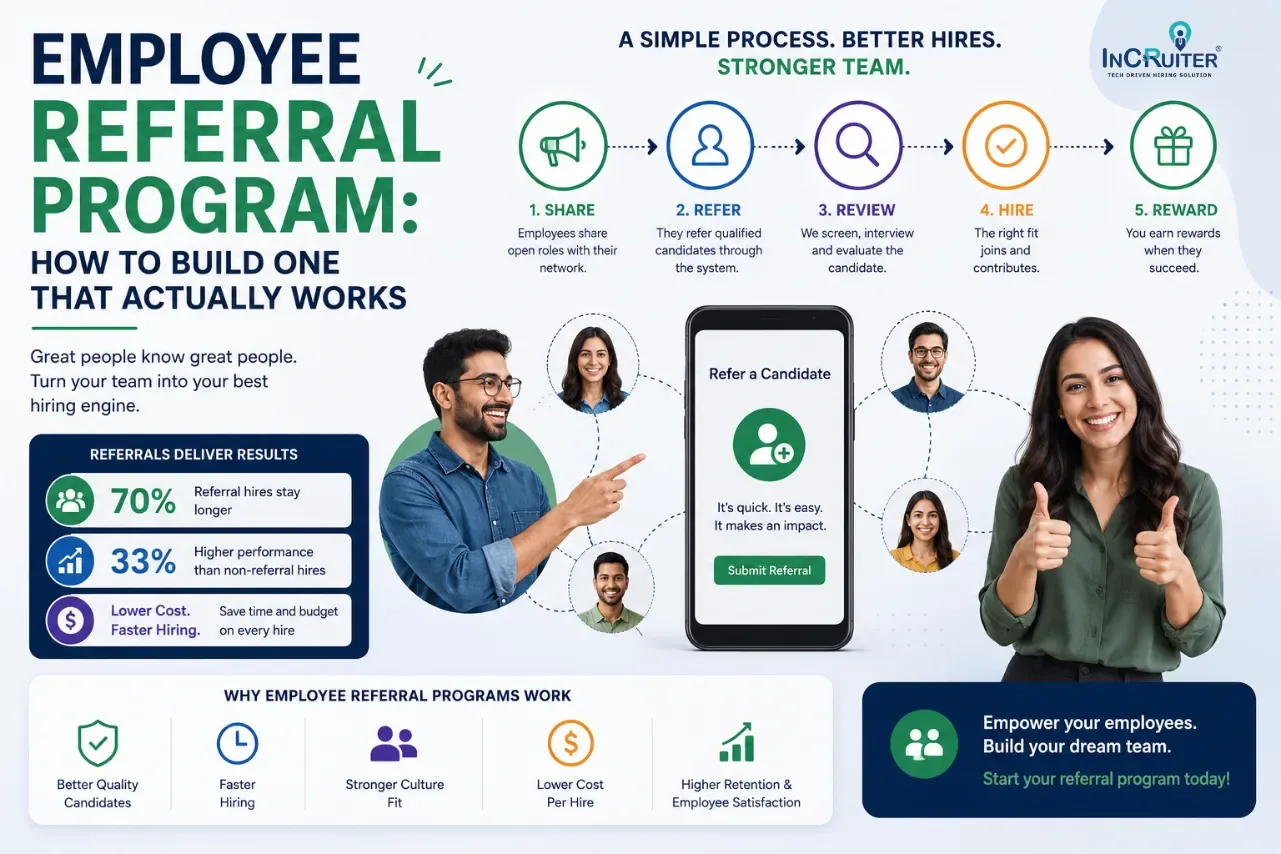
In 2026, if you could fix one single part of the hiring process, it would be the referral program. As per the data, referral hires stay around 70% longer in comparison to the non-referral hires. Additionally, this even saves the time & budget to go for the referral hiring. At the same time, the reports even mention that any referred employee shows a 33% increase in job performance compared to candidates sourced through other channels.
Apart from such benefits, most of the hiring teams and talent acquisition specialists do not consider employee referral programs as a top priority in the hiring cycles. Usually, they post a new job opening, mention it in a Slack message, and hope that someone will share the job opening with the potential candidates. Even after this, the HR teams remain clueless as to why the employee referral pipeline remains empty while the job board expenses keep rising.
In this guide, we’ll cover what exactly an employee referral program is, why it is so important for new-age hiring cycles, how to create employee referral bonus programs, and more about how it can be a game-changer for hiring campaigns.
What Is an Employee Referral Program?
An employee referral program is an organized hiring process in organizations where internal employees refer candidates from their network for open job roles. In exchange for the referrals, these employees are likely to receive incentives or other gifts for their recommendations. However, every organization has its own candidate referral policy that binds the reward only in the case of successful hiring, and the candidate remains active in the role for a defined time period.
Although the employee referral’s meaning and implementation seem simple, the actual process behind it needs more consideration. The person working in the organization remains familiar with the culture, working atmosphere, dynamics, and almost everything. This makes it the perfect individual to evaluate people to determine if they will be a right fit for specific roles and organizations. With referral programs, the company is not getting someone just based on the resume, but it is more based on the candidature and organization-level parameters.
Why Most Employee Referral Programs Quietly Fail
Considering the above-mentioned data reports, it must be coming to your mind why these employee referral programs fail or remain underused. Here are some of the common reasons that will give you scenarios where companies struggle with this.
- Employees are unaware whether the new job roles are open. Companies usually announce the referral programs during the job opening, and they quickly fade from everyone’s memory.
- Usually, the referral process remains too lengthy for candidates. If any referral program requires five steps to submit, people will skip it and move on.
- Employee referral bonuses that are too small don’t excite others to share the right referrals and can cost more with other hiring channels.
- The missing feedback loop in the referral pipeline discourages the employees, and they don’t take further interest in the process.
- Manual tracking of the employee referral process takes too much time to streamline referrals, bonuses, and other stages.
The best part is that none of these problems requires too much budget to fix. The best employee referral software with the power of AI (Artificial Intelligence) can deliver structure to make the referral program a reliable hiring channel.
Step-By-Step Process To Implement Employee Referral Program
| **Number** | **Step Detail** | **Core Focus** | **Key Actions & Best Practices** |
| 1 | Define Goals & Eligible Roles | Set clear targets and choose which jobs to focus on first. | Identify the specific goals, such as quicker hiring, lower costs, and better retention. The best approach is to start small by targeting multiple departments with maximum hiring needs. Make sure not to launch the company-wide referral program on the first day itself. |
| 2 | Design the Bonus Structure | Create a rewarding and easy-to-understand referral payout system | Pay the same referral amount for every candidate referral. Further, these incentives and rewards should scale as per the senior levels or expert roles. Make sure to keep around 2% to 5% of the total recruitment budget for candidate incentives. |
| 3 | Build a Smooth Referral Process | Make candidate details submission quick and effortless for employees | Keep the referral form short and compact that it can be filled in just minutes. It should ask only essential details of the candidate, like name, contact info, short note, etc. The form should be integrated with the built-in employee referral software. |
| 4 | Set Clear Eligibility Rules | Establish fair guidelines and document them clearly | Decide beforehand if hiring managers can refer people to their own teams. Keep it clear whether HR and recruitment staff can have bonus amounts. Keep all referral-related rules in a centralized place that can be easily accessed. |
| 5 | Promote the Program Continuously | Keep promoting the referral program along with marketing campaigns | Remind employees about open roles on a weekly or bi-weekly basis. Share referral updates via existing communication channels, such as Slack or newsletters. |
| 6 | Close the Feedback Loop | Keep employees updated on the status of their referrals | Make sure to send a quick acknowledgement for the submitted referral. Keep sending timely updates once candidates are screened, and the final decision is made. |
| 7 | Track Performance & Adjust | Review key metrics quarterly to improve the system | Track the total hiring percentage from candidate referrals. Compare various metrics against other job boards and channels. |
Sample Employee Referral Bonus Tier Structure
To make it simpler for you, here is a practical framework for an employee referral program that can align with your company and industry.
| Role Tier | Example Job Roles | Suggested Bonus Range |
|---|---|---|
| Entry-level / High-volume | Customer Support, Retail, Frontline Staff | $300 – $750 |
| Mid-level / Specialist | Software Engineers, Analysts, Marketers | $1,500 – $2,500 |
| Senior / Hard-to-fill | Senior Engineers, Niche Technical Roles | $3,000 – $5,000 |
| Executive / Leadership | Directors, Vice Presidents (VPs), Leadership Roles | $5,000 – $6,000+ |
Usually, the best practice with a referral program is to pay the upfront price to the employee during the new employee hiring process itself. The other half can be after the 90-day candidate retention and performance analysis. This will ensure your organization has genuine and thoughtful referrals that can keep serving the best candidates and talent.
Other Types Of Incentives That Work As Employee Referral Bonus
While the majority of employers think that cash is the only incentive that employees look forward to, in reality, there can be various other incentives for many employees. In 2026, employees don’t refer other candidates for specific job roles only for the cash. There can be several other motivators through the employee referral bonus program. In some cases, the employees are also committed to helping other friends and family members by connecting them with good opportunities. In other scenarios, some employees also refer candidates because they want to see the company grow with the right talent in place.
This simply means that non-cash offers ( such as travel vouchers, extra paid time off, charitable donation, public recognition, and more) can also be a prime source of getting good referral candidates. A lot of organizations also roll out quarterly gift cards or vouchers for top referrers, motivating others to be a part of the program.
Connecting Referrals to a Faster & Stronger Hiring Process
An employee referral program helps in creating a stronger pipeline, but there needs to be a reliable hiring journey that is quicker and organized enough to lead to a successful hire. In a scenario, a referred candidate who waits for multiple weeks for a first interview loses the advantage of a faster approach. That is where the hiring automation comes into the picture to transform your organization’s hiring journey.
InCruiter, one of the best AI recruitment platforms, brings the necessary software and automation to solve the challenges with the referral bonus program. An AI interview software like InCruiter IncBot automates the first-round screening for referred candidates automatically. This saves the strong referral from waiting in the queue and losing interest in the job role. Additionally, an automated scheduling tool like InCruiter IncFeed streamlines the repeated and slow communication that leads to candidates losing interest in the recruitment process.
For experts and senior officials, an interview-as-a-service platform like InCruiter IncServe offers a team of evaluators that can judge candidates on behalf of your team members. With expert interviewers on demand, you can keep your internal teams occupied where it matters the most, increasing productivity levels in the operations.
Do you want your referral pipeline to move more quickly in the hiring processes? Book a demo on how InCruiter helps the recruitment teams evaluate candidates and interview referred candidates without taking away your speed and quality.
Frequently asked questions
What is an employee referral?
An employee referral program is the case when existing employees refer candidates from outside for the specific job roles and openings. They may recommend someone they know or from their family as well. The referral is submitted with a form that requires the candidate’s details and allows HR or other relevant teams to reach out to the right person. The employee referral program comes with a pre-defined bonus or reward that remains applicable if the candidate is active on the job for a defined time.
How does an employee referral program work?
An employee referral system runs when the current employees get a form to submit the candidate details for open roles. The employee referral software will receive those relevant details and use them to track the referrals through the hiring pipeline. The software automatically keeps track of the new employee’s joining time and retention period. Once 60-90 days of continued employment are covered, the referrer receives the bonus or other incentives as per the organizational policy.
What is a typical employee referral bonus amount?
Well, the answer to the employee referral bonus amount differs from company to company, as per their budget and recruitment policies. Starting from $500 for entry-level roles, it goes to even $5000 in some cases for senior roles. A lot of companies use a tier-based structure that ultimately boosts the bonus amount based on the role difficulty and seniority level. While an upfront portion of the referral bonus is paid during the candidate hiring, the remainder goes to the new hire across a 90-day milestone.
Why do employee referral programs often fail?
Most of the organization doesn’t really look into what an employee referral is before even planning to implement one for their organization. These programs fail because of structural and process problems rather than existing employees not taking them seriously. Usually, the lack of ongoing communication about the open roles, missing feedback, and submission process leads to delays or situations where referrers are not getting their bonus on time. Once your company is able to fix these issues and automate the process using AI-based software, there will be more referrals coming in a short time.
Does employee referral software make a real difference?
Yes, employee referral software automates the candidate details submission, tracking, and connects referrals directly with the relevant stakeholders in the HR & TA teams. Along with this, it even takes care of automated bonus calculations, bonus payouts, and other incentives based on the qualification window. This allows companies to have clear visibility into their referral and hiring systems with the power of AI-based systems.
Ready to Transform Your Hiring Process?
Discover how our AI-powered interview platform can streamline your recruitment and find the best candidates faster.
Make Your Hiring Process Smart and Fast