




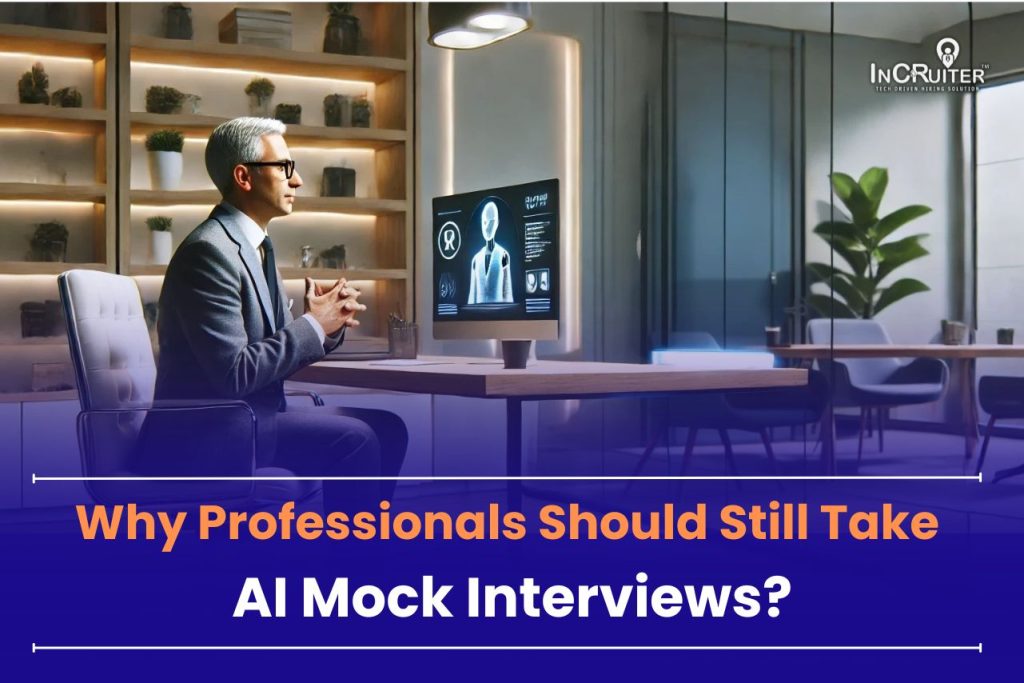
Recent layoffs at Microsoft, Google, and Amazon sent shockwaves through the tech industry, reminding us that no role, regardless of seniority, is immune in today’s volatile market. Even professionals with decades of experience are suddenly thrust back into the interview circuit, rusty and unprepared. A McKinsey director with 15 years of experience recently confided that her first post-layoff interview was “a train wreck” despite her stellar career. This is where AI mock interviews offer a lifeline, providing a private space to rebuild interview muscles that may have atrophied during years of job security.
In this blog, we’ll examine why even the most seasoned professionals should embrace AI interview preparation, how it addresses unique challenges experienced candidates face, and why staying interview-ready is critical even when you’re not actively job hunting.
What Are AI Mock Interviews?
AI mock interviews are practice interviews powered by artificial intelligence that help professionals prepare for real job interviews. Instead of practicing with a friend or mentor, candidates interact with an AI system that asks interview questions, records responses, and evaluates performance.
These interviews simulate real hiring scenarios such as HR rounds, technical discussions, behavioral interviews, or leadership conversations. The goal is to help candidates identify gaps in communication, confidence, structure, and clarity before facing an actual interviewer.
AI mock interviews are especially useful because they allow repeated practice without pressure, scheduling issues, or judgment.
How AI Mock Interviews Differ from Traditional Mock Interviews
Traditional mock interviews usually depend on human availability, fixed schedules, and subjective feedback. AI mock interviews, on the other hand, are automated, flexible, and data-driven.
With AI mock interviews:
- Candidates can practice anytime, anywhere
- Feedback is consistent and unbiased
- Performance is measured using clear metrics like clarity, pace, confidence, and structure
Unlike traditional methods that rely mostly on opinions, AI mock interviews focus on patterns and improvement areas based on actual responses.
AI Mock Interviews vs Traditional Mock Interviews
| Aspect | AI Mock Interviews | Traditional Mock Interviews |
|---|---|---|
| Availability | Available 24/7 without scheduling | Depends on interviewer availability |
| Feedback | Instant, structured, and data-driven | Subjective and experience-based |
| Practice Frequency | Unlimited practice sessions | Limited by time and cost |
| Bias | Consistent and unbiased evaluation | Can vary based on interviewer |
| Customization | Role, industry, and skill-specific | Often generic |
| Cost | Usually more affordable over time | Expensive for repeated sessions |
| Performance Tracking | Progress tracked across sessions | No structured tracking |
| Pressure Handling | Simulates real interview stress gradually | Can feel artificial or inconsistent |
Why Experienced people need AI Mock Interviews?
Enhancing Communication & Clarity
Even after decades in leadership roles, many executives struggle to articulate complex ideas under pressure. A senior VP at a Fortune 500 company discovered through AI feedback that he used “um” 47 times in a 15-minute mock interview. The structured, immediate feedback from AI systems helps eliminate these communication blindspots, forcing professionals to refine responses that they’ve become complacent about. This becomes particularly crucial for C-suite candidates, where every word must demonstrate strategic vision and executive presence.
Keeping Up with Modern Hiring Trends
The interview landscape has transformed dramatically. Goldman Sachs now uses AI to screen 40% of their senior candidates, while Microsoft employs structured behavioral assessments with automated scoring. Experienced professionals who haven’t interviewed in 5+ years often find these algorithmic evaluations jarring. By practicing with online mock interview systems that mirror these modern approaches, seasoned candidates can adapt to these new paradigms rather than being blindsided by them. The days of relying solely on your impressive resume and network connections to secure positions are fading.
Identifying Subtle Weaknesses & Biases
Unlike human interviewers, whom your reputation or credentials may influence, online mock interview practice provides brutally objective feedback. A marketing executive with 12 years of experience was surprised when AI analysis flagged her tendency to over-emphasize past achievements rather than addressing forward-looking questions. These subtle patterns of using too many technical terms, failing to structure responses clearly, or unconsciously displaying gender-coded language are precisely what trip up otherwise qualified candidates. The mock interview platform identifies these blind spots with data-driven precision that human feedback rarely achieves.
Mastering Time Management for High-Stakes Interviews
Senior leadership interviews are notoriously compressed twenty minutes to showcase decades of experience. AI mock interviews train executives to deliver substantive yet concise responses. One CFO candidate practiced systematically with mock interview tools before a board interview, learning to distill complex financial turnarounds into 90-second responses without sacrificing impact. This ruthless editing process ensures experienced professionals don’t fall into the common trap of rambling through war stories when precision is required. For director-level and above positions, this skill is non-negotiable.
Data-Driven Insights for Performance Improvement
Modern AI interview platforms analyze thousands of data points, including vocal tone variations, keyword frequency, answer structures, technical accuracy, and facial expressions. This granular feedback helps seasoned professionals understand precisely how they’re being perceived. A principal engineer discovered his explanations of system architecture were too jargon-heavy for cross-functional leadership roles despite being perfectly appropriate for technical positions. This intelligence helps veterans calibrate their responses based on specific audiences rather than delivering one-size-fits-all answers.
Preparing for Leadership & Executive-Level Interviews
The questions posed to senior candidates differ fundamentally from those asked earlier in their careers. Instead of “Tell me about a time you solved a problem,” executives face nuanced inquiries like “How would you transform our European division while maintaining team cohesion?” AI systems can simulate these sophisticated scenarios, forcing practiced reflection on leadership philosophy, change management approaches, and strategic decision frameworks. This targeted preparation helps executives articulate their leadership narrative coherently rather than improvising under pressure.
Benefits of AI Mock Interviews for Industry Professionals
Stress Management & Confidence Building
Even the most accomplished professionals experience interview anxiety. A study of C-suite executives found that 83% reported significant stress before high-stakes interviews. AI mock interviews provide consequence-free environments to work through this tension. A senior product director practiced her acquisition interview responses seventeen times with an AI system before meeting the actual board. This methodical exposure therapy builds muscle memory for pressure situations, ensuring that when the actual interview arrives, your mental bandwidth isn’t consumed by anxiety but focused on strategic thinking.
Industry-Specific Readiness & Customization
Interview expectations vary dramatically across sectors. Healthcare executives face questions about regulatory compliance and patient outcomes, while tech leaders must address scaling challenges and innovation cycles. Advanced AI interview platforms offer industry-specific modules that simulate these contextual differences. A pharmaceutical executive preparing to transition to biotech used AI simulations to practice addressing questions about venture funding and agile development topics outside his experience that are crucial in his target industry. This customization makes practice genuinely relevant.
Preparing for Virtual & Recorded Interviews
Since 2014, the number of one-way video interviews, where candidates record responses to predetermined questions, has increased by 71% for senior roles. These asynchronous formats require a distinct skill set: delivering compelling, structured answers without the benefit of interviewer feedback. AI mock interviews provide the perfect training ground for this modern format. Professionals can practice maintaining energy throughout responses, structuring answers within strict time limits, and conveying presence through camera skills that differ markedly from traditional conversational interviews.
Enhancing Salary & Negotiation Skills
Compensation talks at senior levels are now more complex. They involve equity, deferred pay, and performance-based structures. AI interview platforms now offer negotiation simulations for these situations. An engineering director learned from AI feedback that she sounded apologetic when discussing pay. This hurt her market value. By practicing with AI, she improved her confidence and strategy. Experienced professionals can sharpen their negotiation skills using these tools. This can lead to better offers. In some cases, it may add hundreds of thousands to their pay.
Also read: Benefits of AI-Based Interviews for HR Professionals
How AI Mock Interviews Work
AI mock interviews follow a structured and easy-to-use process designed to feel like a real interview.
Question Generation & Simulation
The AI generates interview questions based on job roles, experience level, and industry. These questions can include behavioral, situational, technical, or leadership-focused scenarios.
The experience is designed to mimic real interviews, including time limits and follow-up questions.
Real-Time Feedback & Analytics
After the interview, the AI analyzes responses and provides clear feedback. This includes:
- Communication clarity
- Confidence and tone
- Answer structure
- Use of examples
- Areas needing improvement
This feedback helps candidates understand not just what went wrong, but why.
Customization by Role & Industry
AI mock interviews can be customized for different roles such as software engineers, managers, sales professionals, or executives. Industry-specific questions help candidates prepare for realistic expectations and hiring standards.
This makes the practice more relevant and effective compared to generic interview preparation.
When to Start AI Mock Interview Practice
Active Job Hunters
For professionals actively applying for jobs, AI mock interviews help sharpen interview readiness quickly. Practicing before every major interview improves confidence and reduces common mistakes like unclear answers or poor time management.
This preparation often leads to better performance in real interviews and higher selection chances.
Always-On Career Readiness
AI mock interviews are not only for job seekers. Professionals can use them regularly to stay interview-ready, improve communication skills, and prepare for unexpected career opportunities.
This habit builds long-term confidence and keeps professionals prepared for promotions, internal interviews, or leadership roles.
Why AI Mock Interviews Are Essential Even When Not Job Hunting?
Staying interview-ready is crucial in today’s unpredictable job market. Opportunities and disruptions can arise suddenly. When Google restructured its AI division, senior engineers with over ten years of experience had just three weeks to reapply. Those who practiced interviews regularly adapted quickly. Others struggled, despite their expertise. Regular AI interview practice keeps your skills sharp even every few months. It ensures your career story is clear, your examples are fresh, and your communication is strong. This habit turns sudden career changes into new opportunities rather than setbacks.
Also read: How AI Mock Interviews Help in College Placements?
Conclusion
The days when experienced professionals could coast through interviews on reputation alone are over. Today’s hiring processes, even for the most senior roles, involve structured assessments, AI-powered analysis, and rigorous evaluation frameworks. By embracing AI mock interviews as part of ongoing professional development, seasoned executives can maintain a crucial competitive edge. The professionals who thrive in this new landscape won’t necessarily be those with the most impressive backgrounds but those who can effectively articulate their value under pressure.
Don’t wait for the urgent email from HR to start preparing by then; it’s already too late. The most strategic leaders are already incorporating InCruiter AI mock interview preparation into their professional routines, ensuring they remain as marketable as they are accomplished.
FAQs About AI Mock Interviews
Are AI mock interviews suitable for experienced professionals?
Yes. AI mock interviews are especially useful for mid-level and senior professionals who want to refine communication, leadership responses, and strategic thinking.
Can AI mock interviews replace human interview coaching?
AI mock interviews do not replace human coaching but complement it by offering unlimited practice and objective feedback.
Do AI mock interviews help with confidence?
Yes. Repeated practice in a low-pressure environment helps candidates become more comfortable and confident during real interviews.
Are AI mock interviews role-specific?
Most modern AI mock interview tools allow role-based and industry-specific customization for better preparation.
How often should professionals take AI mock interviews?
Practicing once or twice a month helps maintain readiness, while active job seekers may benefit from weekly sessions.
Ready to Transform Your Hiring Process?
Discover how our AI-powered interview platform can streamline your recruitment and find the best candidates faster.

Related Blogs
Best Practices for Implementing Technical Interview as a Service in Your Organization
Is your company’s interview procedure equitable and inclusive? Or, are there chances to counter bias, leading to onboarding candidates with a variety of experiences and...
Global Expansion Made Easy with Interview as a Service
Expanding your workforce globally? Interview as a Service helps businesses hire top talent worldwide with structured, expert-led, and scalable interview solutions.
How AI Chatbots Are Enhancing Candidate Engagement in Recruitment?
AI chatbots are transforming recruitment by providing instant, interactive communication that boosts candidate engagement and improves hiring outcomes.
Why Choose Interview as a Service Over Hiring In-House?
Interview as a Service offers efficiency, scalability, and expertise that in-house hiring can't match. Discover why it's the preferred choice today.
Top IT Staffing Companies in 2024
The IT market today is fiercely competitive. So, for any organization to stand out, finding the right talent is crucial. It’s not just a one-time...
Interview Outsourcing: A Proven Solution for Better Hiring Outcomes
Explore why interview outsourcing is helping companies hire smarter, faster, and more accurately—backed by expert panels and structured evaluations.


